# 最后一公里性能

## **概览**

IP 网络最后一公里性能（Last-mile Performance）展示了各个 PoP 节点与其服务区域终端用户之间的网络质量，包括运营商类型、覆盖范围和平均 Ping 延迟等关键数据。常见应用场景包括：

### **常见使用场景**

<table><thead><tr><th width="212.6221923828125">场景</th><th>描述</th></tr></thead><tbody><tr><td>站点规划与 PoP 选址</td><td>评估目标城市或区域的 ISP 网络质量</td></tr><tr><td>覆盖率分析</td><td>比较多个 PoP 节点下的终端用户访问体验</td></tr><tr><td>回源路径优化</td><td>选择延迟最低的 ISP 路径作为回源通道</td></tr><tr><td><strong>性能审计</strong></td><td>监控某个 ISP 的 Ping 抖动与延迟趋势</td></tr></tbody></table>

## **操作流程**

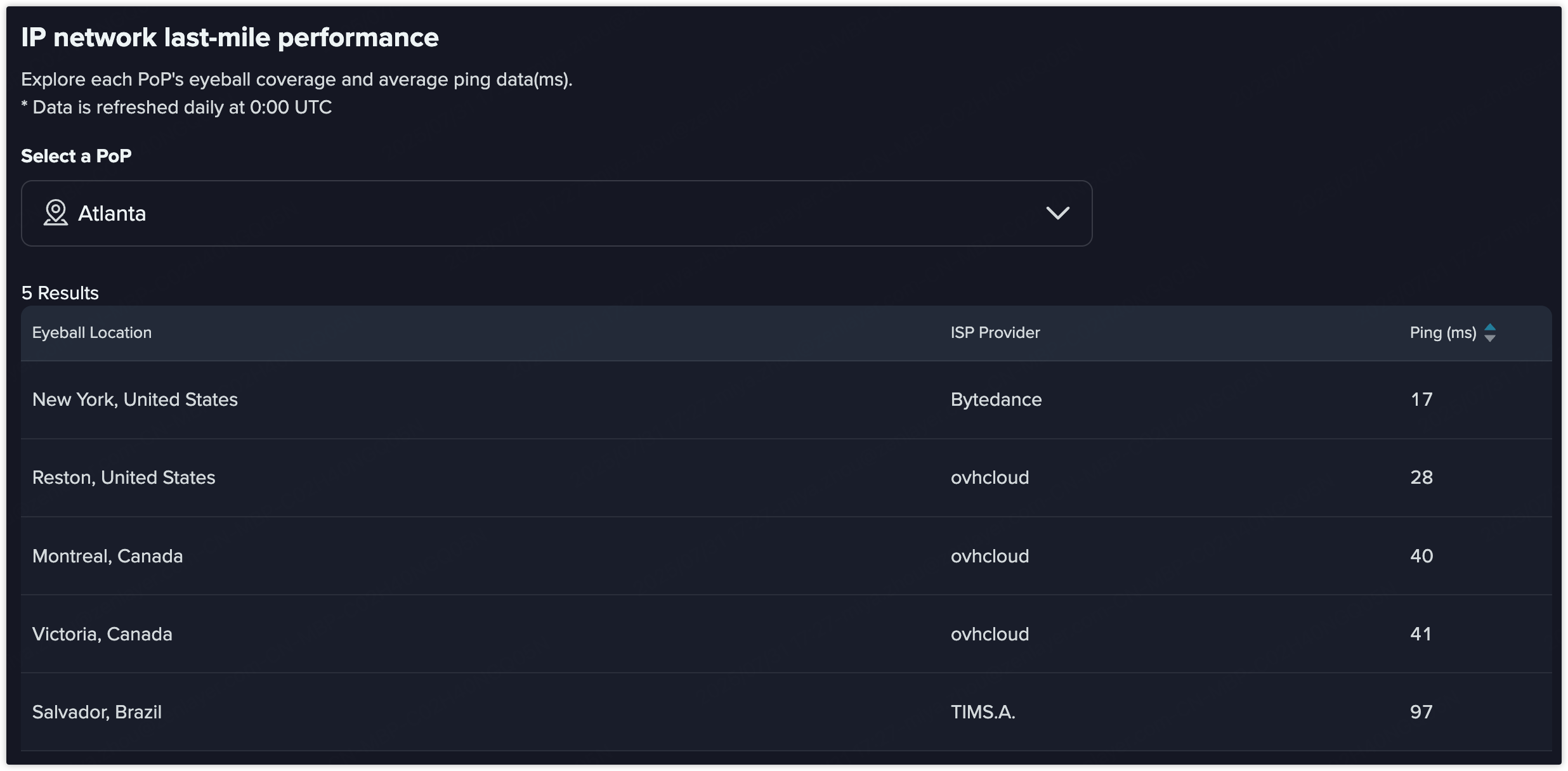
<div align="left"><figure><img src="/files/DgXxWl5k6l8jht6REu0R" alt=""><figcaption></figcaption></figure></div>

### **参数说明**

<table><thead><tr><th width="167.7003173828125">参数</th><th>描述</th></tr></thead><tbody><tr><td>PoP 节点</td><td>用于测试 ISP 连通性的源 PoP 节点。不同 PoP 的测试结果不同，仅展示已与 Zenlayer 建立对等连接的 ISP。</td></tr><tr><td>终端用户位置</td><td>表示终端用户所在的城市/区域，用于评估区域连通性。</td></tr><tr><td>ISP 运营商</td><td>提供该终端区域网络接入服务的运营商名称。</td></tr><tr><td>平均 Ping 延迟</td><td>从 PoP 到该 ISP 的平均延迟（毫秒），延迟越低、波动越小代表性能越好。</td></tr></tbody></table>

### **操作步骤**

1. 选择一个 PoP 节点（如 `Atlanta`）；
2. 系统将展示该节点可访问的终端 ISP 列表，包含以下信息：
   * 覆盖的 ISP 数量
   * 每个 ISP 的名称与对应区域
   * 平均延迟（毫秒）
3. 可按延迟排序，快速识别性能最佳的 ISP。

## **常见问题解答（FAQ）**

**Q1：如何判断哪个 ISP 最好？**\
**A1**：查看平均 Ping 最低、波动（标准差）最小的 ISP。通常表现最好的前 3 家 ISP 即为最优选择。

**Q2：ISP 数量少是否代表服务差？**\
**A2**：不一定。有些地区由少数大型 ISP 提供服务，表现依然优秀。建议综合评估 ISP 的**覆盖率**与**性能**。

**Q3：是否展示丢包数据？**\
**A3**：当前仅提供平均 Ping 数据，暂不显示丢包率。

**Q4：支持导出 ISP 性能数据吗？**\
**A4**：目前暂不支持数据导出功能。


---

# Agent Instructions: Querying This Documentation

If you need additional information that is not directly available in this page, you can query the documentation dynamically by asking a question.

Perform an HTTP GET request on the current page URL with the `ask` query parameter:

```
GET https://docs.console.zenlayer.com/welcome/cn/platform/looking-glass/last-mile-performance.md?ask=<question>
```

The question should be specific, self-contained, and written in natural language.
The response will contain a direct answer to the question and relevant excerpts and sources from the documentation.

Use this mechanism when the answer is not explicitly present in the current page, you need clarification or additional context, or you want to retrieve related documentation sections.
